Relative scale
Use visible iris width as a reference to record how an affected area changes relative to the eye.
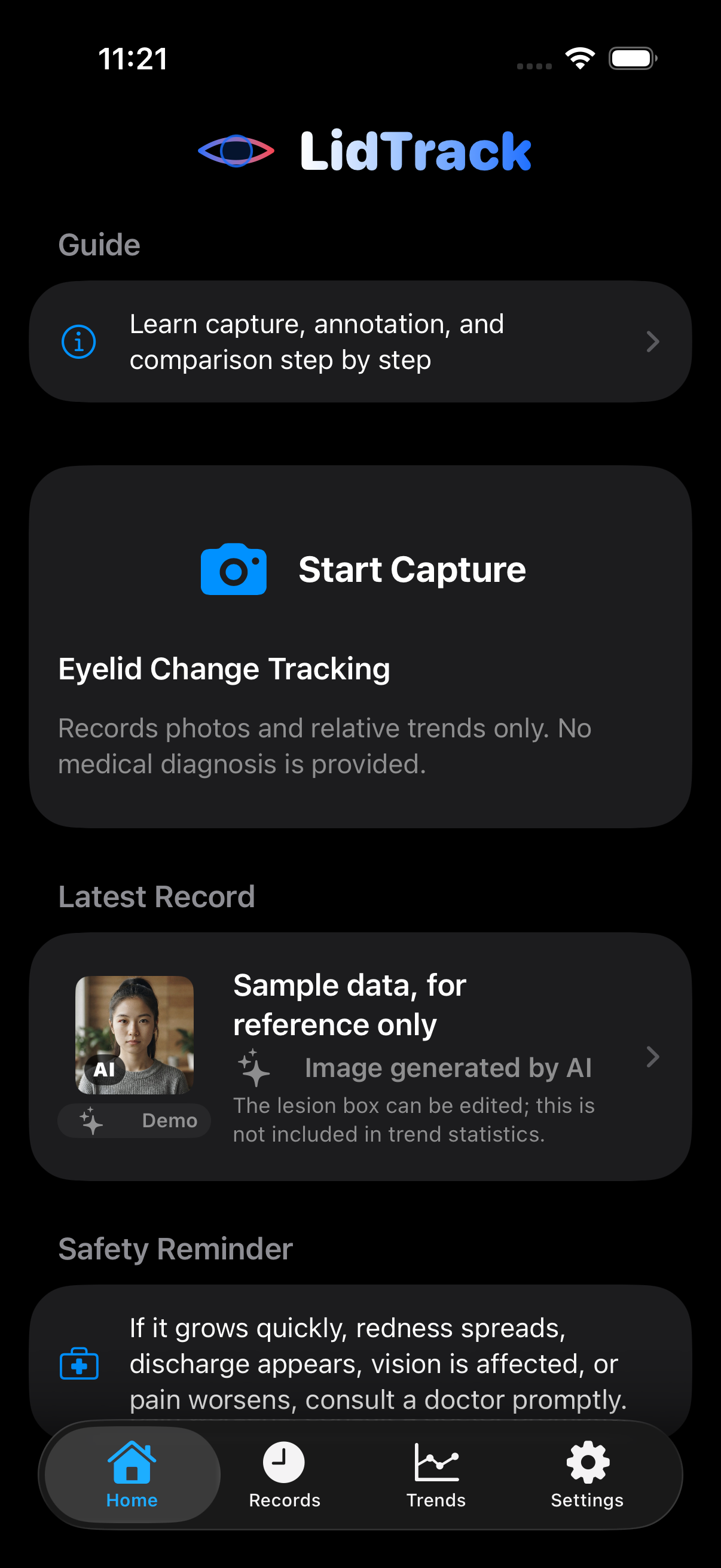
Select a dot to view another screen
Private, continuous, comparable tracking
The appearance of styes and chalazia may change over time. Care and treatment may also need to be adjusted following your clinician’s advice, while memory alone makes it difficult to judge objectively whether an area is growing, shrinking, or remaining stable.
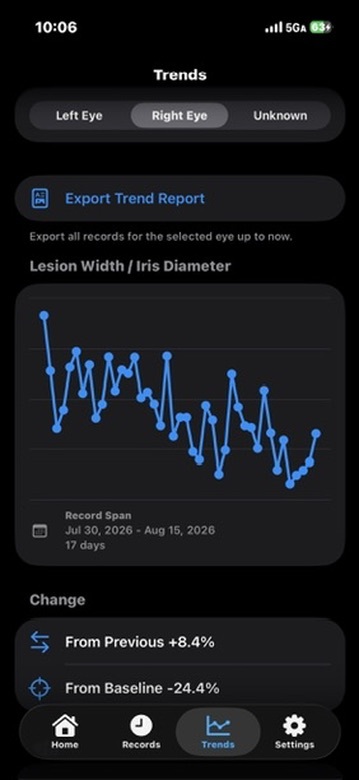
LidTrack uses the visible width of the iris as a relative reference, helping reduce differences caused by camera distance and image scaling so eyelid appearance is easier to compare over time. Similar angles, lighting, and capture methods produce more consistent trend records.
Use visible iris width as a reference to record how an affected area changes relative to the eye.
Review records over time, changes since the previous entry, and baseline trends without relying only on memory.
Photos and records stay on your device. You decide when to create, save, or export a PDF.
HOW IT WORKS
From consistent capture to relative measurement and review, every step stays on your device.
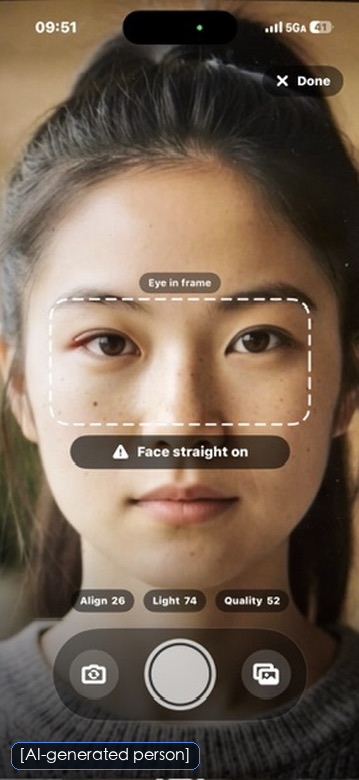
Keep the eyes within the guide and use alignment, lighting, and image-quality cues before capture.
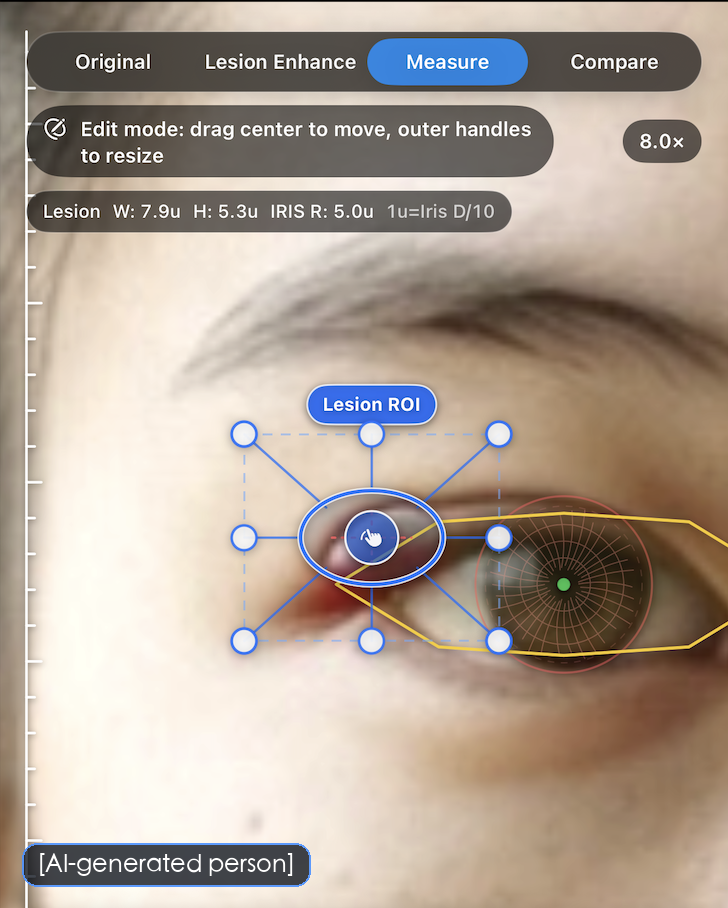
Outline the visible iris and selected eyelid area, using iris size as a relative reference.
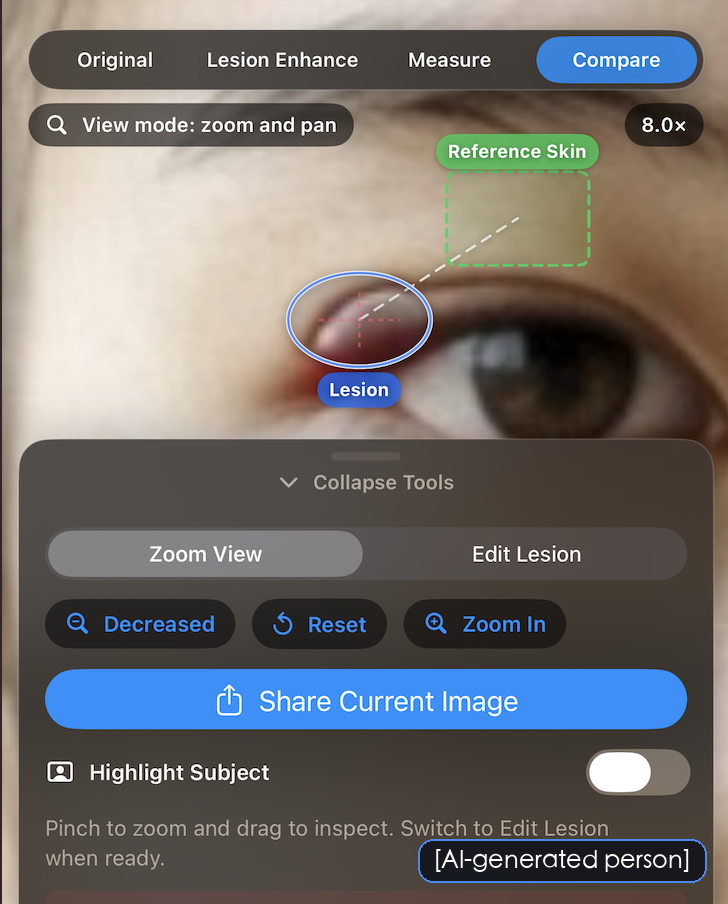
Review the selected and reference areas alongside baseline and historical records.

On-device PDF reporting
Organize photos, relative measurements, and changes over time into a PDF that is easy to review. Reports are generated locally and saved or shared only when you choose.
Reports support personal tracking and communication only. They do not provide diagnosis, treatment advice, or risk grading.